











































Field Report: Thailand
Thailand is the source of some of the most incredible cultivated varieties of houseplants on earth. While perhaps most well-known today for their presence in the aroid market, Thai hybridizers are also known for producing dazzling specimens of cacti and succulents. Consistent equatorial temperatures means that heat-loving plants such as Astrophytum and Ariocarpus that are notoriously slow to bulk up in temperate climates can pump out growth year-round. Multiple flowering cycles can also take place in a short period of time, which means that the generational lag between sowing, growing out, and selecting the most promising hybrid offspring to breed can be reduced from years to months. In 2018 I visited 3 different cactus and succulent shops in Chiang Mai and Bangkok.
1. Small hobbyist shop in Jing Jai (JJ) market, Chiang Mai
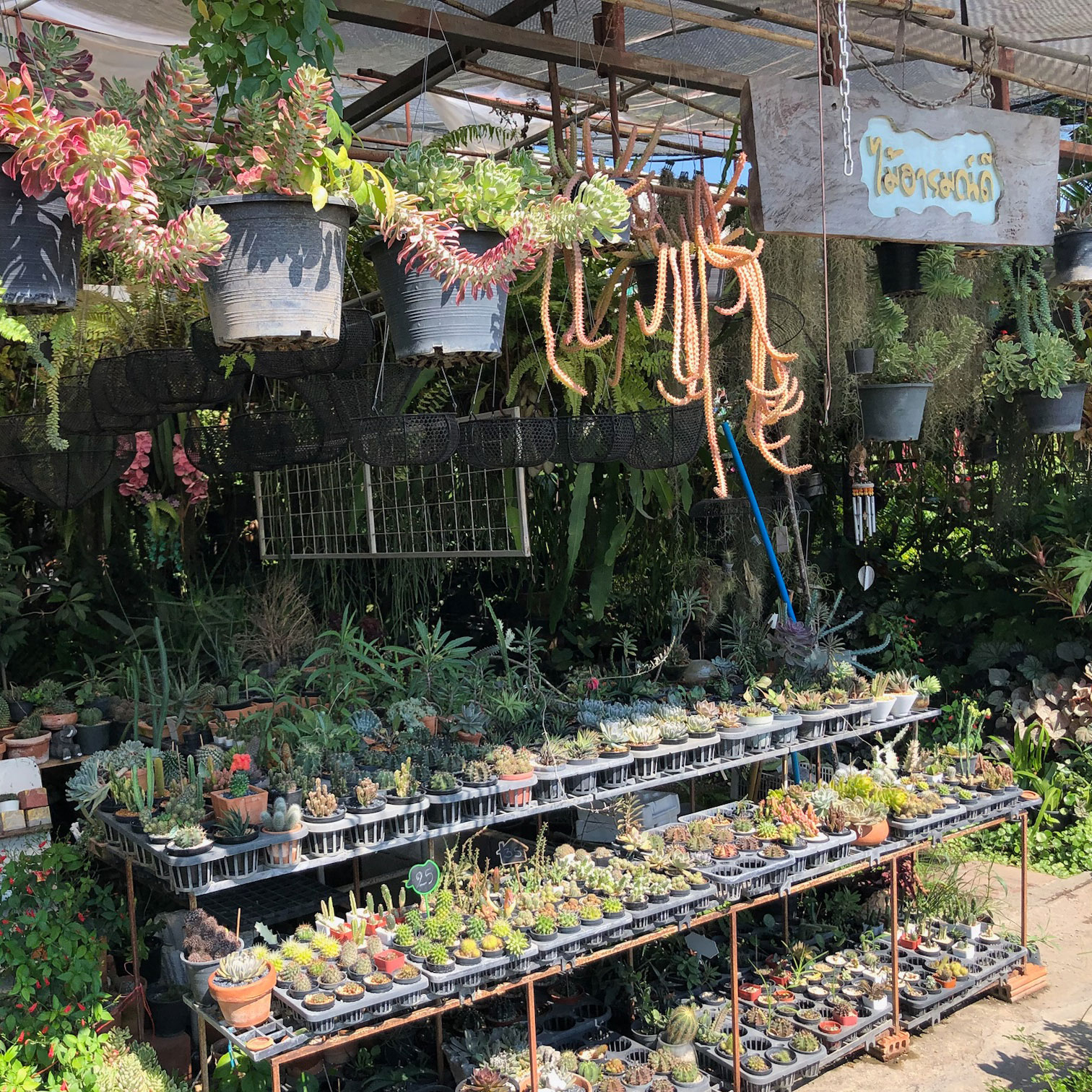
JJ market is a semi-open market area with many shops arranged in long neat rows, with several rows dedicated entirely to plants and gardening goods. This shop caught my eye because while the darkened indoor area seemed to carry mostly household decorations, the front was filled with a riotous mass of variegated Gymnocalycium on densely packed movable shelves. The plants on display were the owner's personal collection, which he had amassed only in the previous few years; He recently began breeding his own plants to sell. It was readily apparant that Gymnocalycium were his favorite, easily making up more than 90% of his collection; I later found out that a particular locality of Gymnocalycium friedrichii, LB 2178 Agua Dulce, was especially beloved by Thai collectors. He offered to sell me a packet of his home-produced seed, which I turned down: A decision I sorely regret to this day. Unfortunately it appears that this shop has since closed down.
2. Jariya Cactus Shop in JJ market, Chiang Mai
RX4X+3PX, Tambon Pa Tan, Mueang Chiang Mai District, Chiang Mai 50300
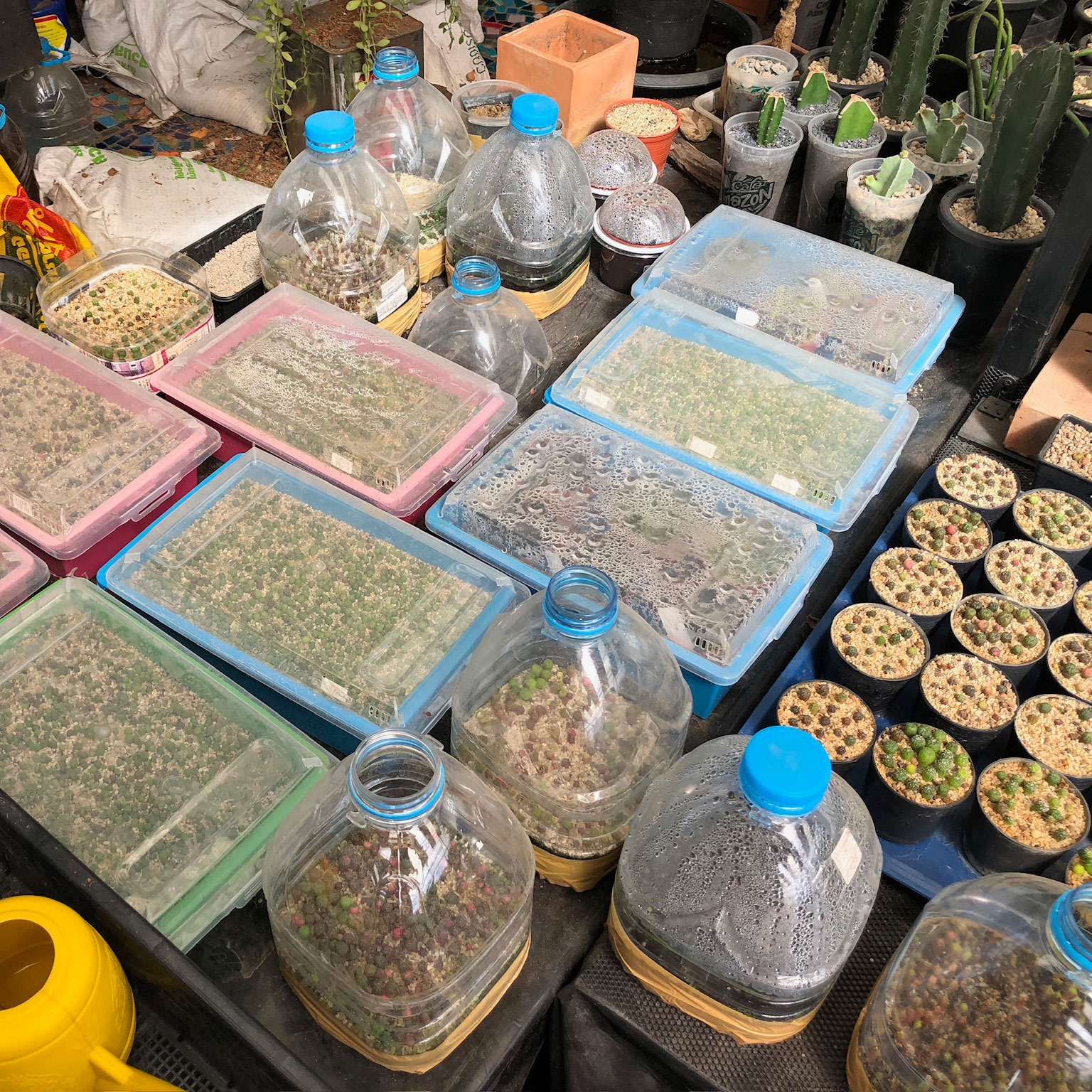
I soon found that my new friend had plenty of competition in the market. One of the more spacious stores in the area was Jariya Cactus Shop, which featured a larger variety of cacti and succulents including what I thought at the time was an impressive spread of Astrophytum asterias. In a back corner of the shop, a worker slowly and methodically pricked out tiny pencil eraser-sized cactus seedlings from crowded germination pods into shallow flats for growing out. Here I realized that certain genuses and even entire families of plants ubiquitous in the US succulent market were almost entirely absent: Echinocereus, Opuntia, Rebutia, Haworthia, and Aloe were all notably underrepresented. Missing, too, were most Crassulaceae, mesembs, and geophytes; It appears that the lack of seasonal variation in temperature and photoperiod comes with disadvantages as well.
3. Uncle Chorn's Cabin, near Bangkok
8/16 หมู่ 2 Wat Sing, Sam Khok, Pathum Thani 12160
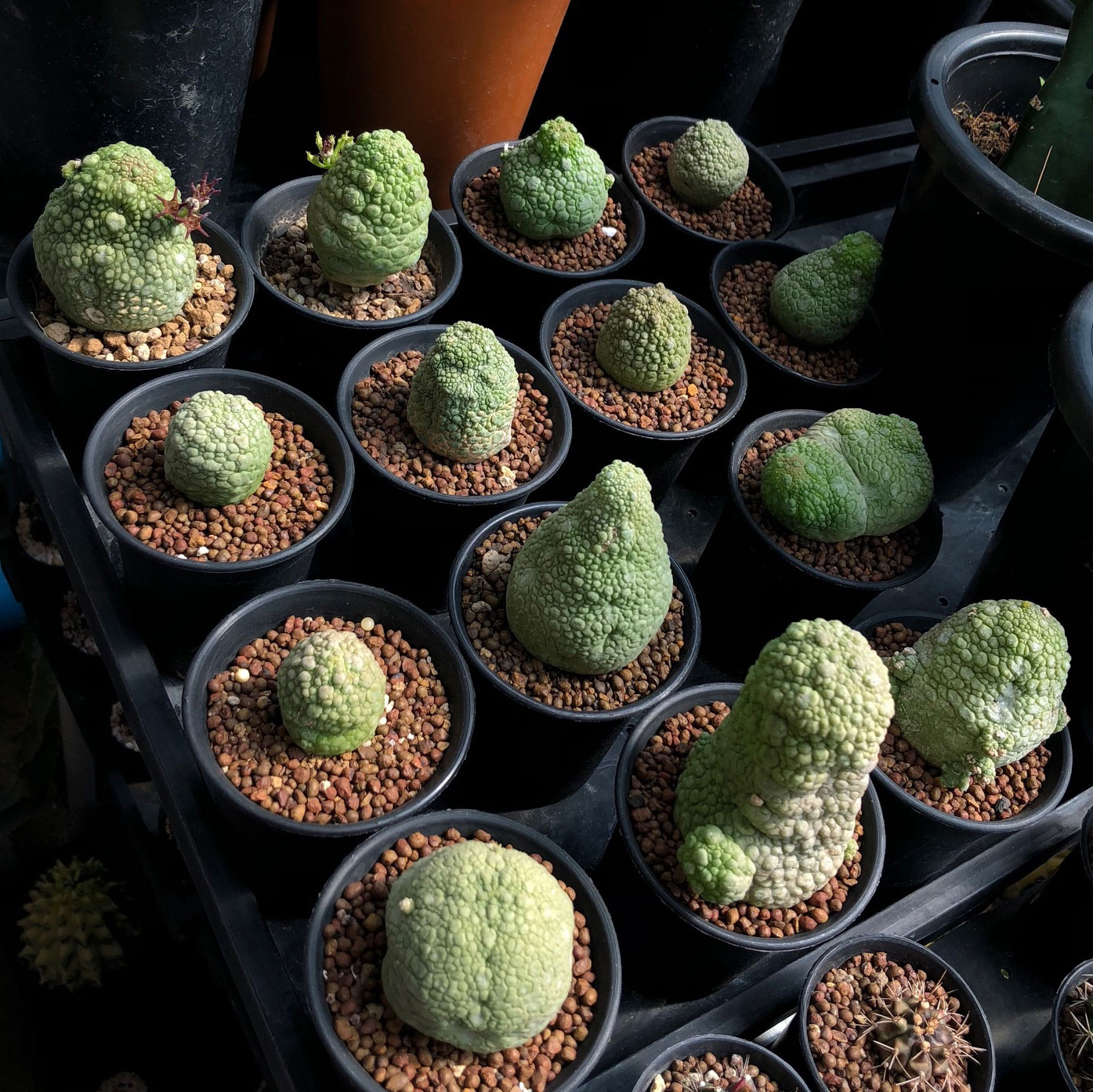
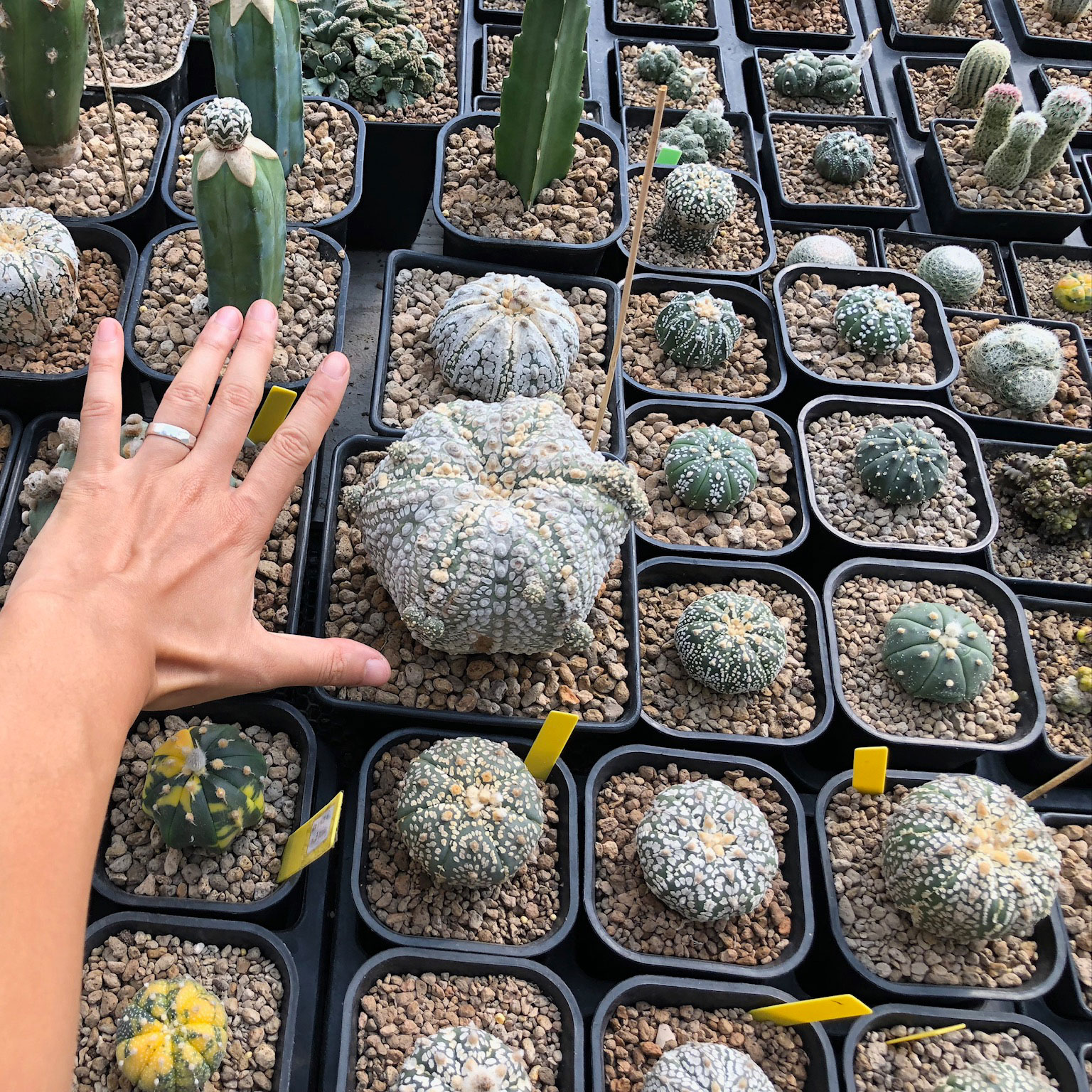
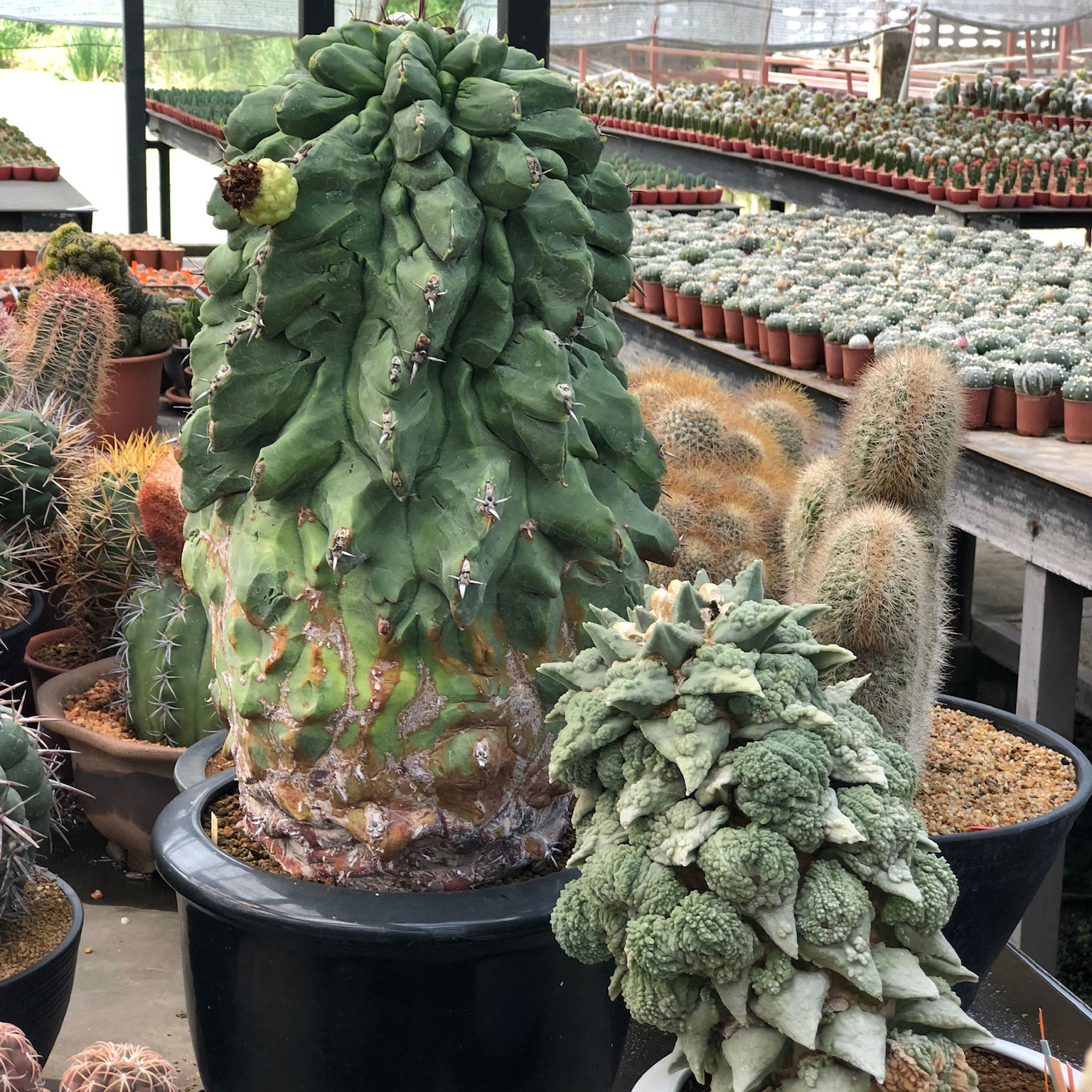
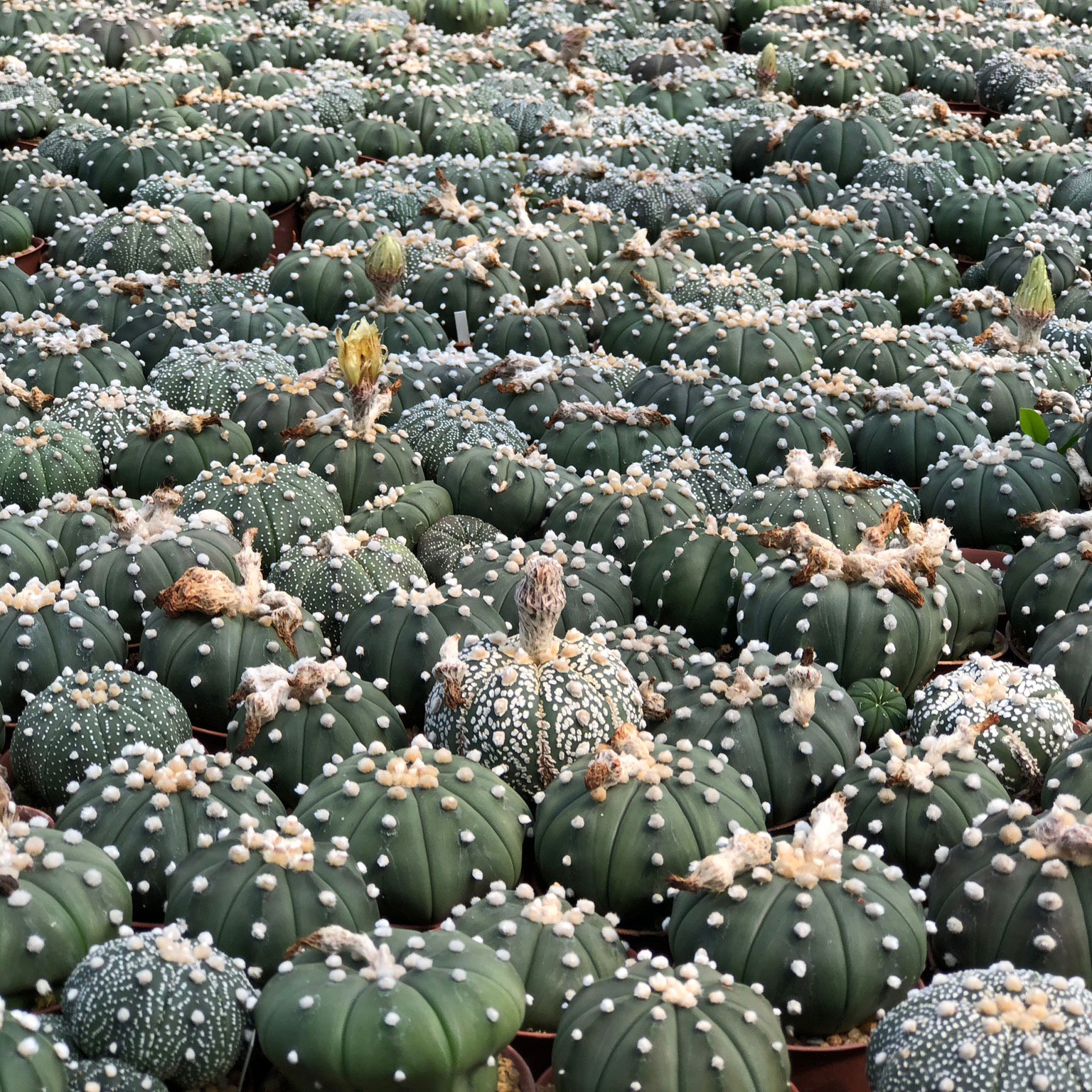
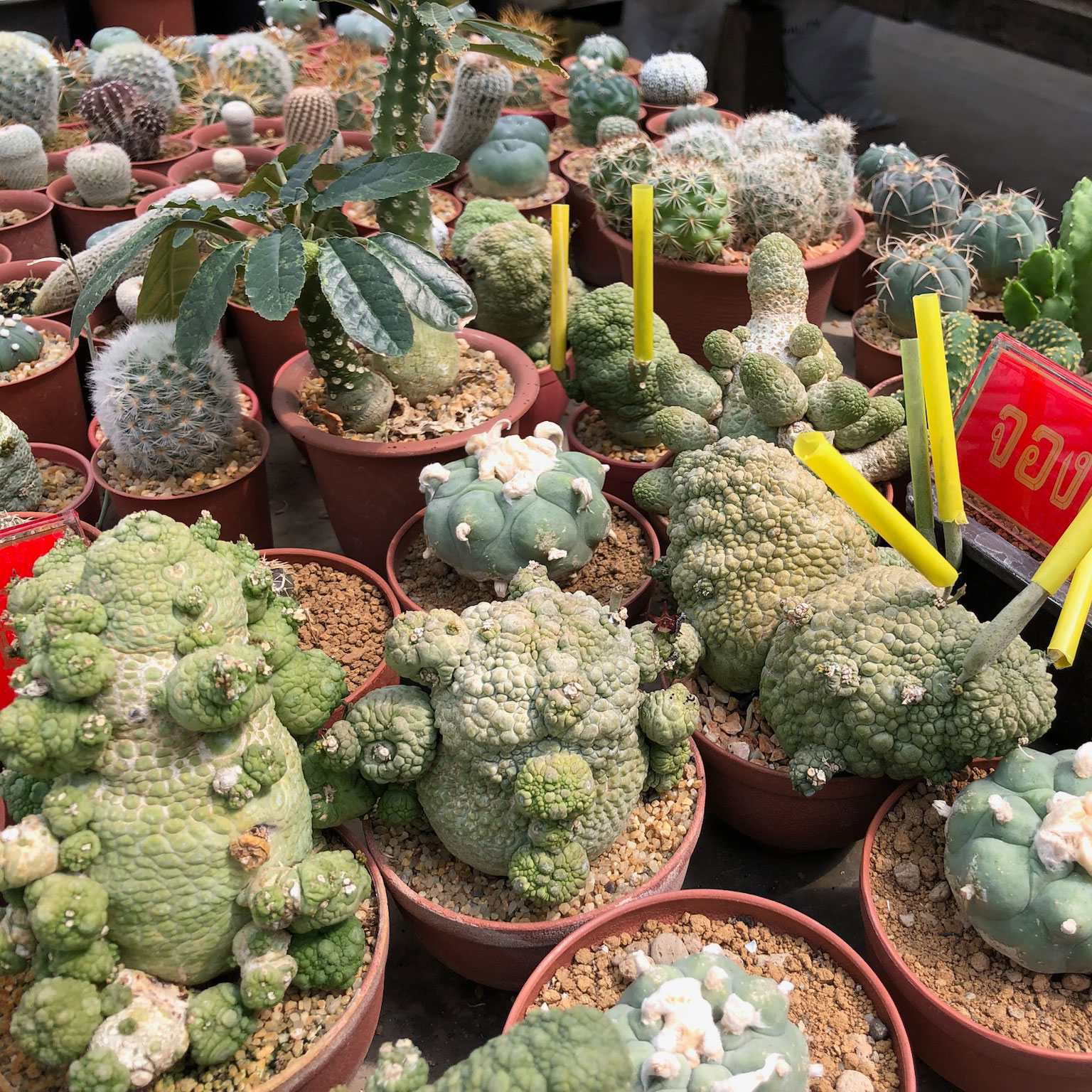
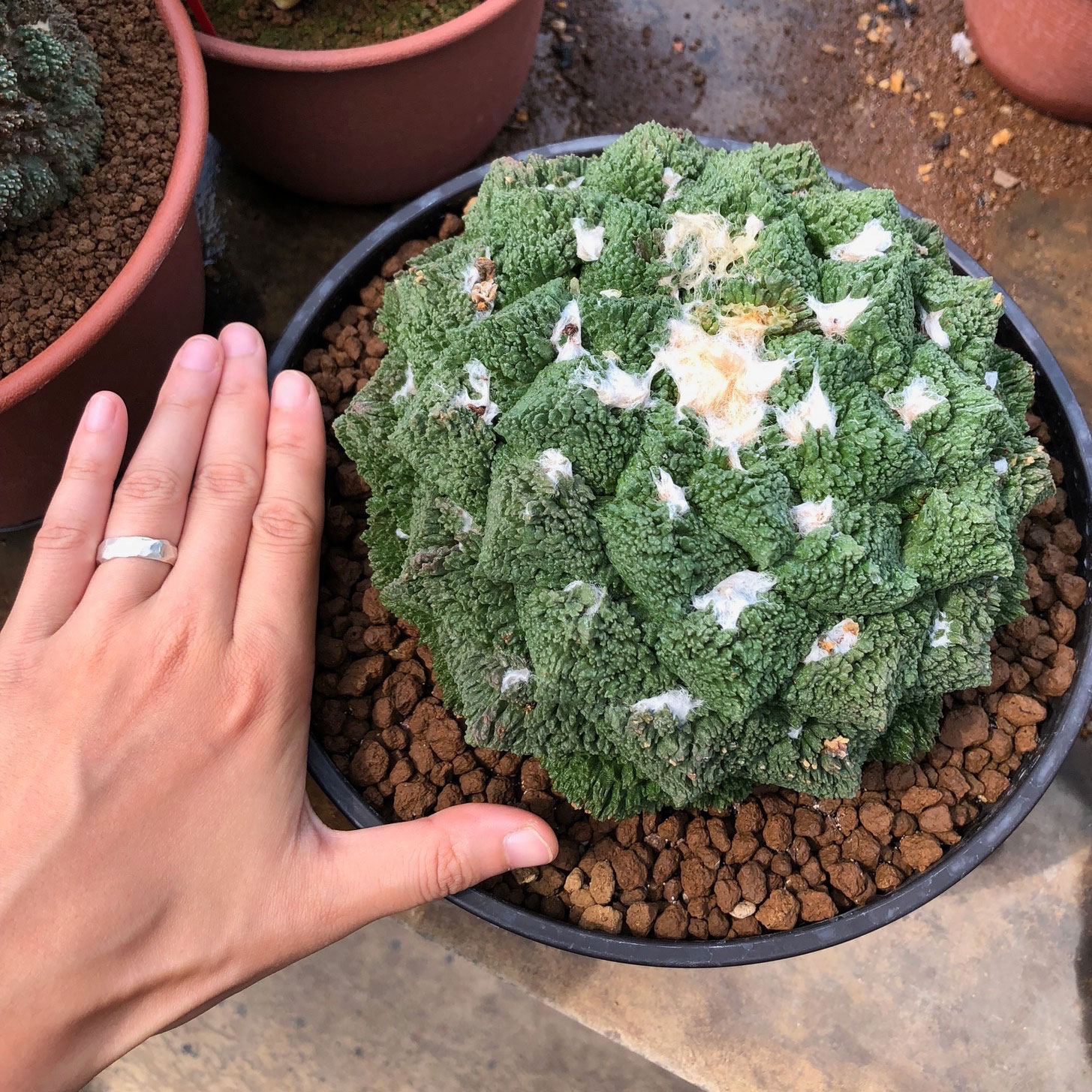
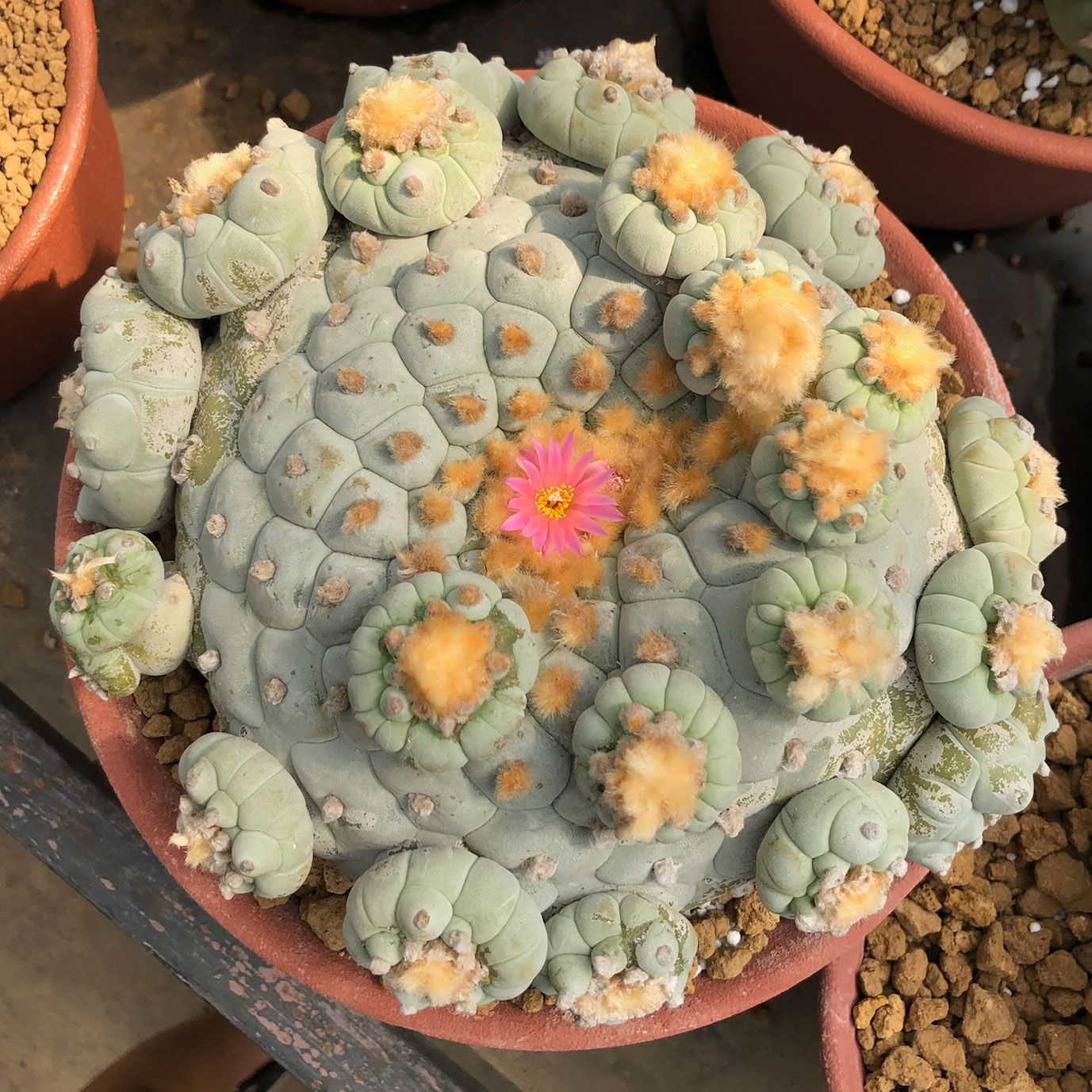
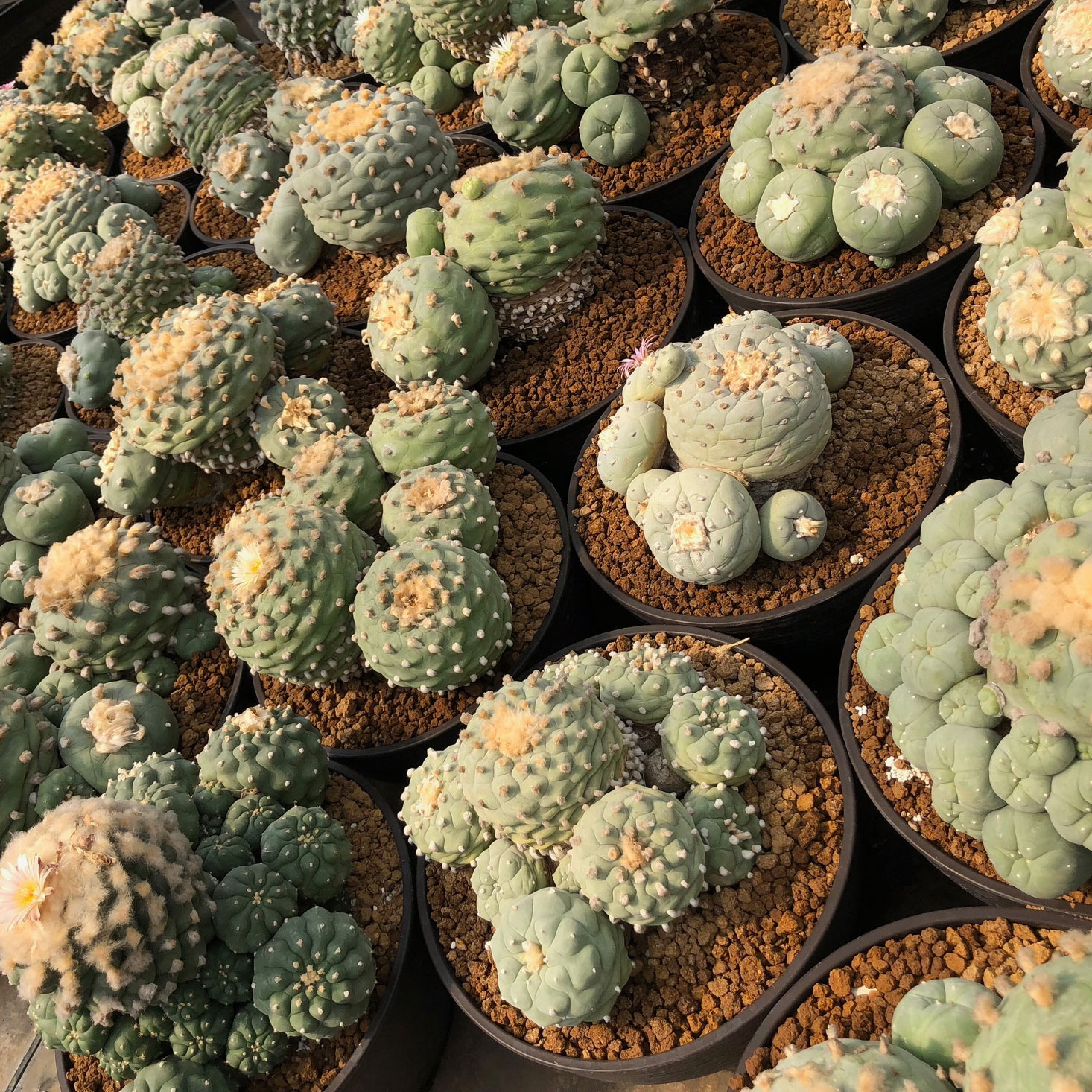
My last stop turned out to be the highlight of my trip. After catching a taxi from Bangkok, I found myself alone at the expansive greenhouses save for two Japanese collectors engaged in negotiations with the owner. This was a massive growing operation specializing in seed-grown Astrophytum, Ariocarpus and Lophophora, clumps of which grew to such gargantuan proportions that they threatened to spill out of their torso-sized tubs. It was difficult to even figure out what to look at and photograph, because as soon as I stopped to admire one plant, three more would grab my attention. Words really cannot do this place justice, so please enjoy the photos.